
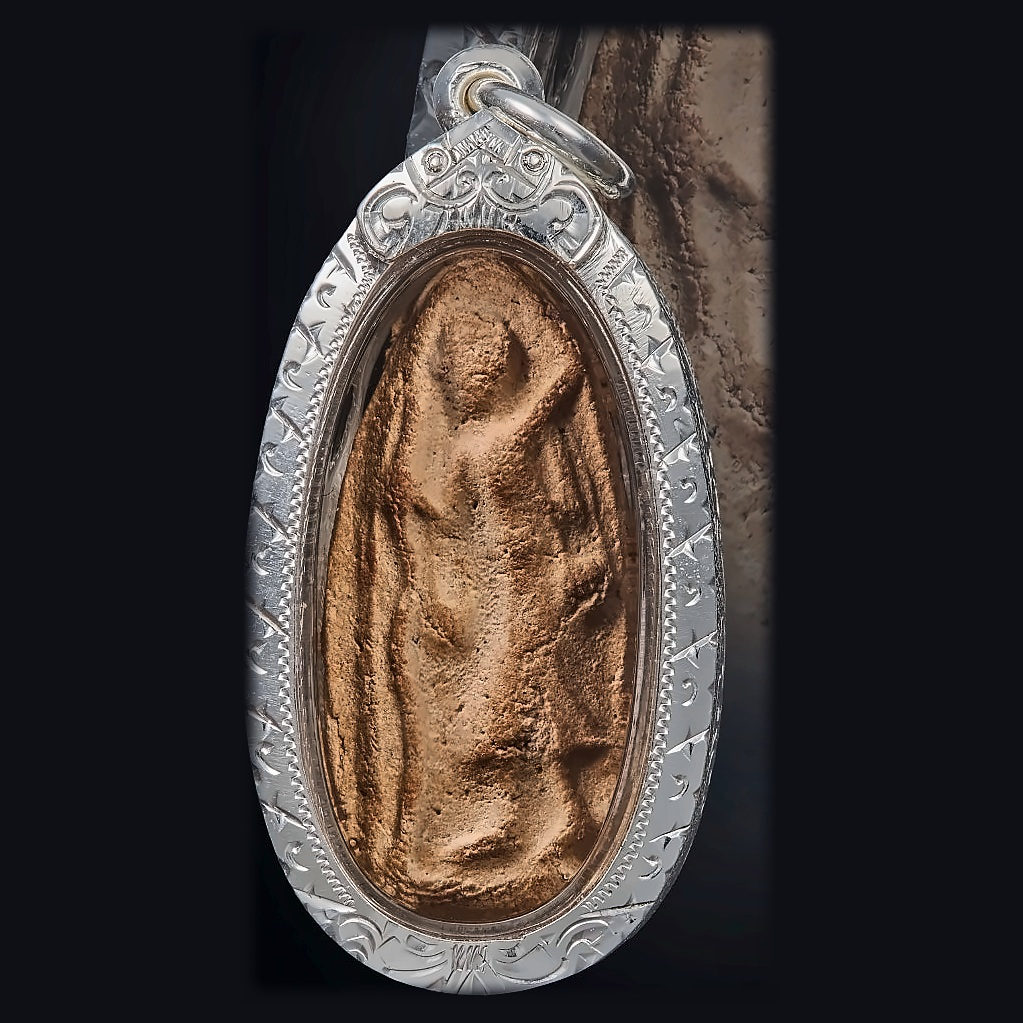
Thai text
Romanised
English meaning
A word-by-word rendering of the Pali gives this meaning: "The great elder Sivali, worshipped by devas and humans, is worthy of the requisites; I pay homage to him always. The great elder Sivali, greatly worshipped by yakkhas and devas, is worthy of the requisites; I pay homage to him always. By this virtue of the elder Sivali, may well-being and gain be mine."
Two small variations are common, and they mean the same thing: วันทามิ ตัง สะทา or วันทามิ สัพพะทา in one line, and โสตถิลาภัง (a Pali form) or สะวัสดิลาภัง (a Sanskrit form) in the last. The wording given here is the most widely used. The heart syllables of Sivali are นะ ชา ลี ติ, Na Cha Li Ti.
How to recite
Begin with Namo Tassa, recited three times, then this katha three, five or nine times. It may be chanted in the morning, between six and nine, or before a shop is opened, especially on a Buddhist holy day, wan phra. Some recite it before sleep, or on waking, before going out to work.
Offerings often include:
- Honey
- Three or five kinds of fruit
- White flowers
Lineage
Phra Sivali is named in the Pali Canon, in the Anguttara Nikaya, as the disciple foremost in receiving gifts. The katha itself is a later Thai composition in Pali, of unknown authorship.