
Thai text
Romanised
English meaning
These stanzas come from the Pali Canon, the Suriya Sutta and the Candima Sutta of the Samyutta Nikaya. Their sense is the question and the answer of the eclipse: "Why, Rahu, did you release the sun in such a hurry? Why have you come trembling, and stand there afraid?" — "My head would split into seven pieces, and I would find no happiness while living, had I not released the sun when enchanted by the Buddha's verse."
How to recite
The recitation is made on Wednesday night, Rahu's day, or after six in the evening, at home or outdoors, facing north-west. Begin with Namo Tassa, recited three times, then the katha eight or twelve times. It is also chanted during an eclipse.
Offerings are eight or twelve black things — among them black chicken, grilled catfish, black coffee, grass jelly, black soda, black sesame, black beans, black sticky rice, seaweed, century egg. The number of incense sticks follows the number of offerings.
A short katha used when the offerings are presented is: คะ พุท ปัน ทู ธัม วะ คะ.
Lineage
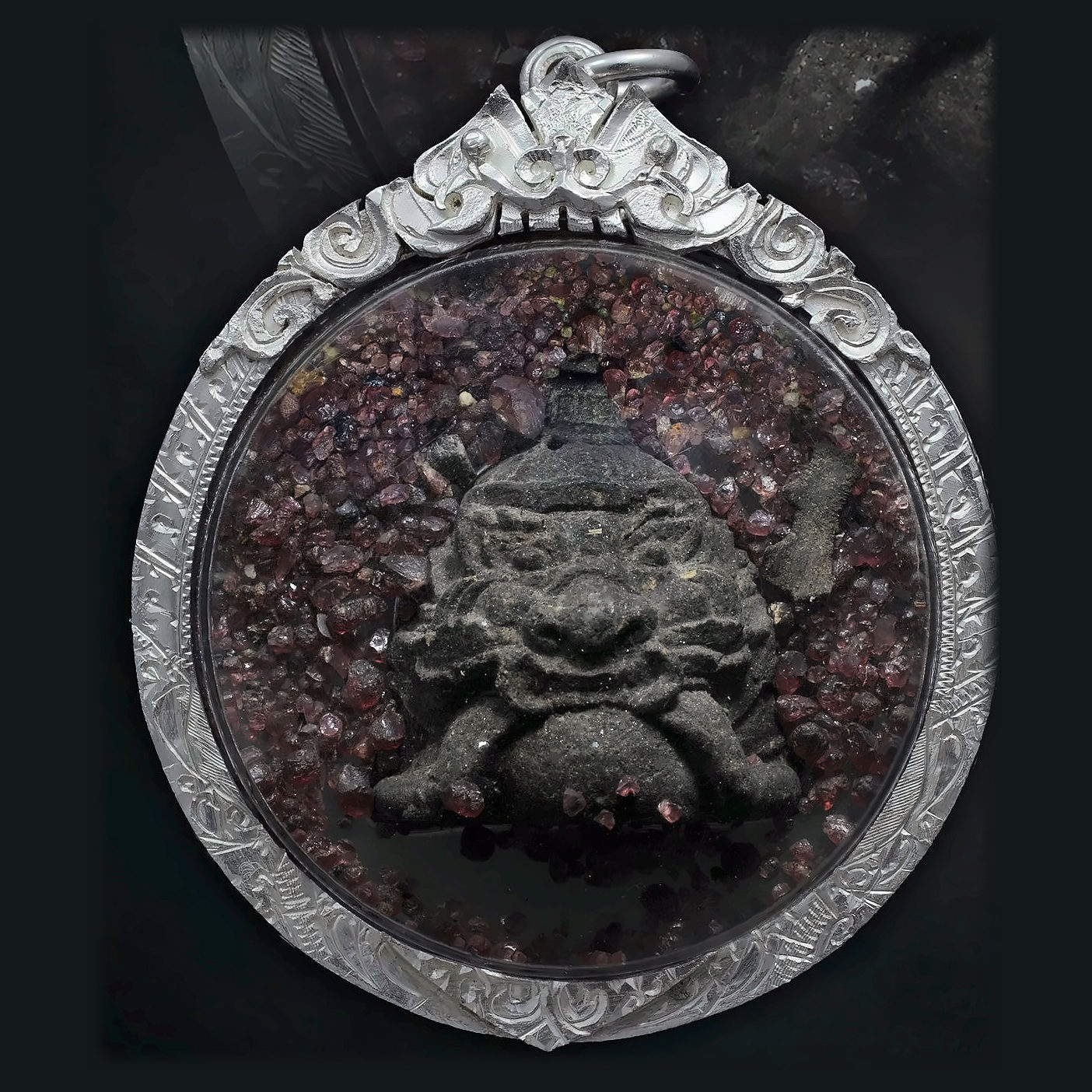
These are canonical stanzas, taken into Thai Rahu worship. Rahu amulets, such as Rahu Om Jan carved from coconut shell, are associated with Wat Sri Sa Thong in Nakhon Pathom.