Thai text
โอมปะระเมสะ นะมัสสะการัม โองการะ นิสสะวะรัง พรหมเรสสะยัม ภูปัสสะวะวิษณุ ไวยะทานะโมโทติ ลูกะปัม ทะระมา ยิกยานัง ยะไวยะลา คะมุลัม สะทา นันตะระ วิมุสะตินัน นะมัตเต นะมัตเตเร จะ อะการัง ตโถวาจะ เอตามา ตาระยัต ตะมัน ตะรามา กัตถะ นารัมลา จะสะระวะ ปะติตัม สัมโภ พะกลโล ทิวะทิยัม มะตัมยะ
Romanised
Om Paramesa Namassakaram, Ongkara Nissawarang, Phromressayam Phupassawa Witsanu, Waiyathanamothoti, Lukapam Tharama Yikyanang, Ya Waiyala Khamulam Satha, Nantra Wimusatinan, Namatte Namattare, Ja Akarang Thothowaja, Etama Tarayat Tamanta Tarama, Kattha Naramla Jasarawa Patitam, Sambho Phakkalo Thiwathiyam Matamya.
English meaning
The recitation is a homage and a request for refuge to Brahma, opening with Om and namassakaram, "I bow in worship." What follows asks for blessings, protection and kindness. Because the wording is a Thai rendering of Sanskrit, the word-by-word meaning has been lost in transmission.
How to recite
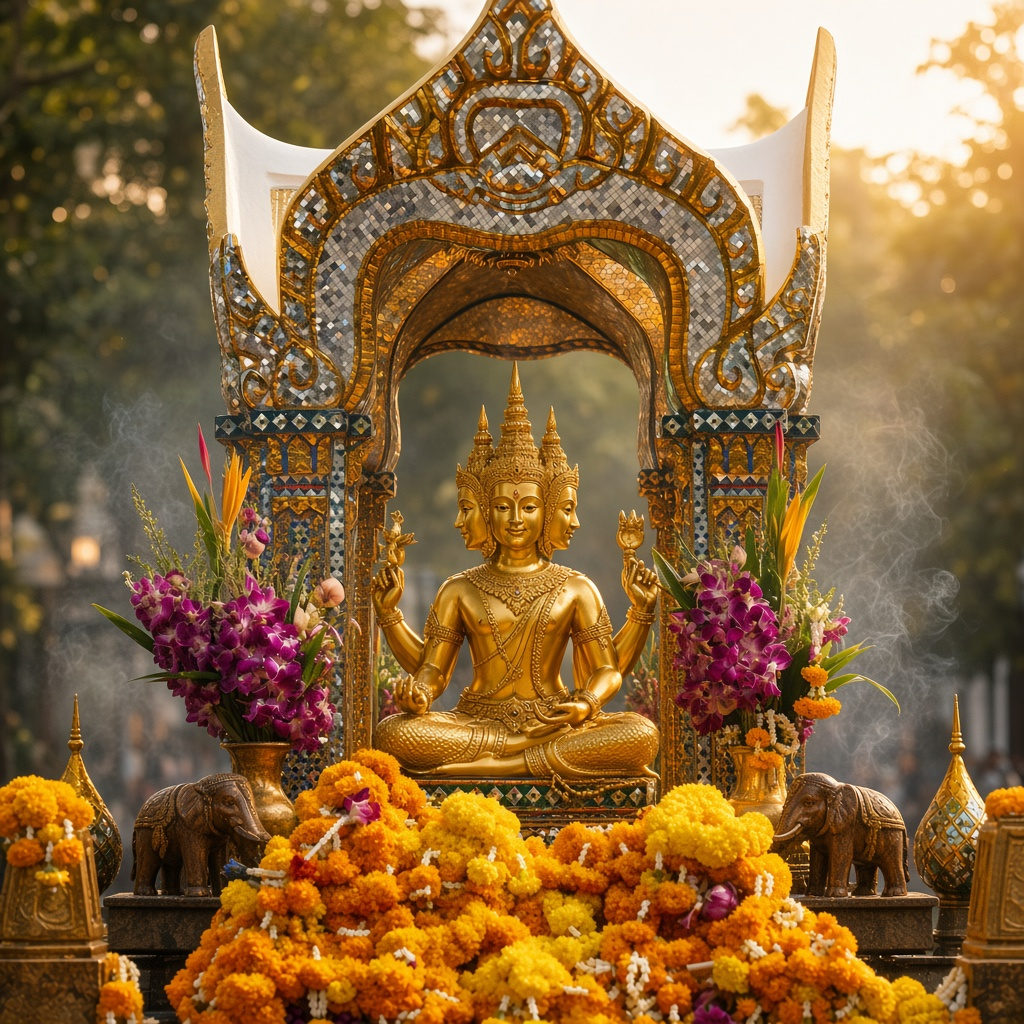
Begin with Namo Tassa, recited three times. The twelve lines make one round, and three or nine rounds are made. A short heart is โอม พรหมมายะ นะมะห์, Om Phrommaya Nama, recited four times. At the shrine itself, all four faces are worshipped, moving clockwise.
Lineage
This is the recitation of the Erawan Shrine — Thao Maha Phrom — in Bangkok. It is a Brahmin mantra, and it is given here as the chant of that shrine.