
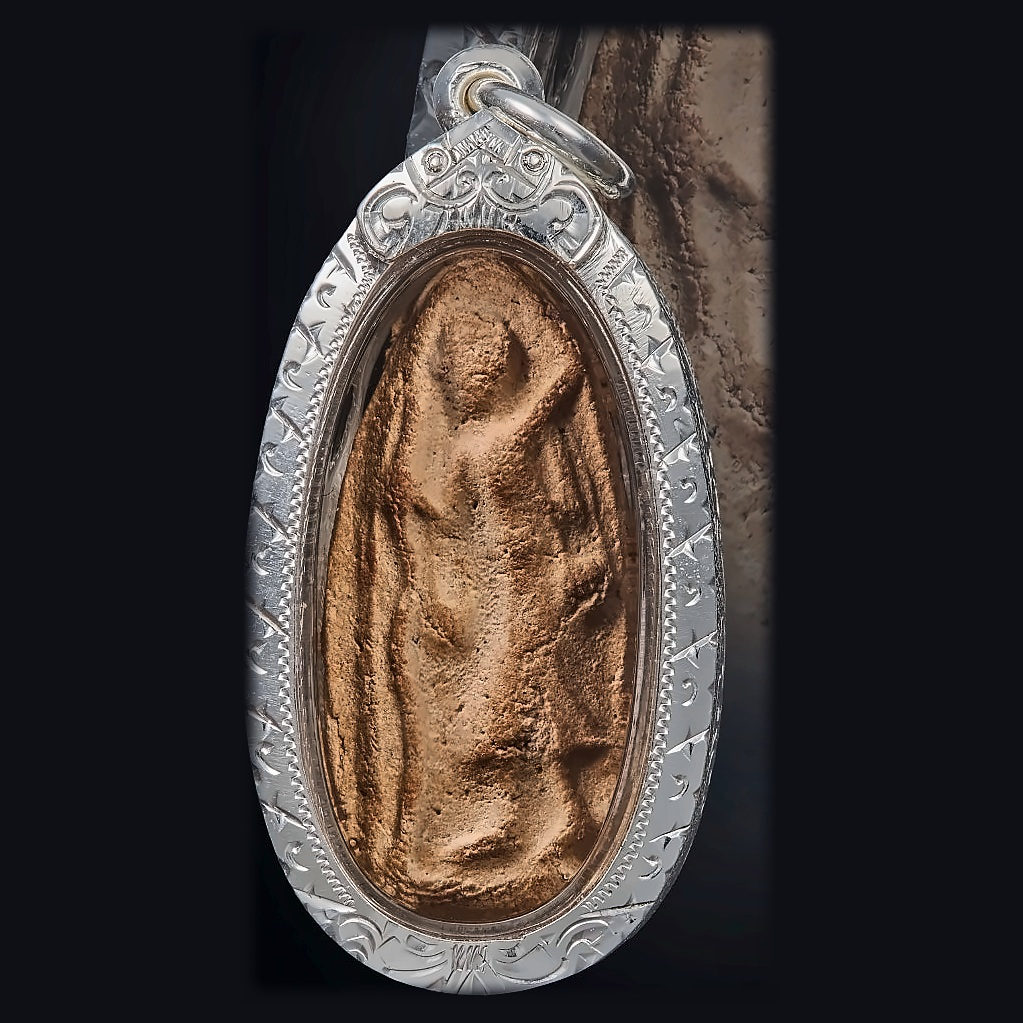
This request for fortune is attributed to a single source, and the Pali of the text is corrupted in places. It should be read with that caution.
Thai text
Romanised
English meaning
No complete translation of the lines is possible, because the Pali has come down in a damaged form. The gist is an invocation: that Sivali, honoured with gifts by humans, devas, Indra, Brahma, Yama and yakkhas, may bring constant gain and honour to the one who worships him and recites his verse. The last phrases, in a working translation, ask: "by the power of the elder, may gain be mine always; by this declaration of truth, may gain be mine always."
How to recite
Begin with Namo Tassa, recited three times, then this request for fortune. The standard Sivali katha is then recited three or seven times a day.
Lineage
The recitation is attributed to Luang Phor Kuay of Wat Kositaram, in Chainat, and is said to have been recorded in his own hand.