Quick facts
- Temple: Wat Pradu
- Province: Samut Songkhram
- Born: 1961 (B.E. 2504)
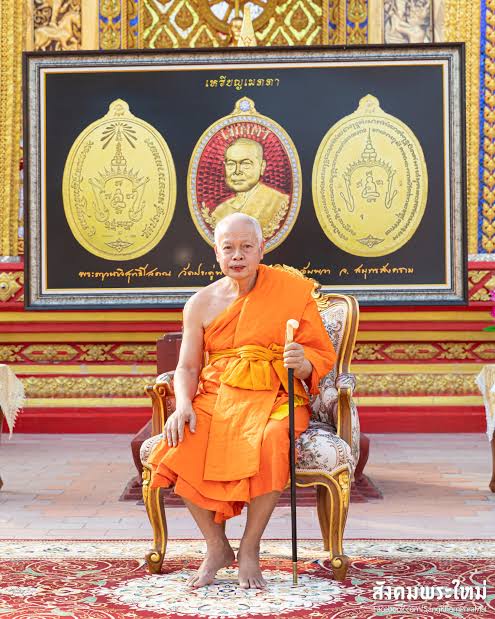
Luang Phor Maha Surasak Atisakkho is the abbot of Wat Pradu, a royal temple in Wat Pradu sub-district, Amphawa district, Samut Songkhram. He is also the Ecclesiastical Governor of Samut Songkhram Province. When the original account was written he was 59, with 37 years as a monk. He was born in 1961 (B.E. 2504) to Mr. Prasit and Mrs. Boonruean Yukamnoed. He finished lower secondary school (Mor Sor 3) and was skilled in fine arts, especially sculpture and moulding.
Ordination and Studies
He was ordained as a novice on 12 March 1976 at Wat Patjantaram, Samut Sakhon. His preceptor was Phra Khru Samut Thammasunthon (Luang Phor Sud of Wat Kalong). He was fully ordained as a monk on 10 July 1983 at the same temple, with Somdet Phra Theerayanamuni of Wat Pathum Khongkha Ratchaworawihan, Bangkok, as his preceptor, and was given the monastic name Atisakkho. He studied Pali grammar and passed the Dhamma exams at the beginner level in 1976, intermediate in 1977 and advanced in 1978. In 1986 he passed Pali level 5 (Por Tor 5) at Wat Pathum Khongkha. He became known for his Dhamma sermons, astrology and building design.
Abbacy and Titles
- 1990: The villagers of Amphawa invited him to stay at Wat Pradu as acting abbot.
- 1991: He was officially appointed abbot of Wat Pradu.
- 2004: He was appointed a preceptor, which lets him ordain monks, and kept rising in rank after that.
- 2011: He received the royal title Phra Khru Phisan Jariyaphirom, as a first-class royal temple abbot.
- 5 December 2016: King Maha Vajiralongkorn raised him to Phra Rajakhana (ordinary class), with the title Phra Bhavana Visuthisophon. This was part of the merit-making ceremony for the birthday anniversary of the late King Bhumibol.
- 2019: He was appointed Ecclesiastical Governor of Samut Songkhram.
Teachers and the Magic He Learned
- Luang Phor Yod Chinawaso (former abbot of Wat Kaew Charoen): takruts (rolled metal amulets) including Lok Thart, Solos Mongkol, Phokasap (wealth), Maha Rangab Prab Hongsa and Maha Prab, plus five-coloured Benjarong sacred thread.
- Luang Pu Jang, Wat Khuean Phet, Phetchaburi: the Na Pad Talod spell.
- Luang Pu Juea Piyasilo, Wat Klang Bang Kaew, Nakhon Pathom: Bia Kae (cowrie-shell protection amulets).
- Ajarn Saneh, Ban Bang Kluai, Ratchaburi: Maha Saneh charm wax and oil.
- Ajarn Sudta, Roi Et: bone-setting.
- Ajarn Suk, Nai Wiang, Roi Et: various other subjects.
- Ajarn Seng Srikham: Khun Thale (Palad Khik phallic charms).
- Luang Pu Kham, Wat Phra That Doi Suthep, Chiang Mai, and Luang Phor Ta, Wat Khao Kaew, Saraburi: meditation (kammatthana).
- Ajarn Sukree Pattanasupong: astrology.
- Ajarn Ruam Suksri: Sak Yant sacred tattooing.
- Khru Nak, Kanchanaburi: incantations (akom).
- Luang Pu Dr. Pichai, Wat Khao Hong, Lopburi: gold-blowing (Pao Thong).
Notable Consecrations
He is seen as one of the most spiritually powerful masters of today. He helped consecrate the King Taksin the Great coins made by the Wat Arun community, both the first batch (2015) and the Krung Thonburi batch, which marked 250 years since Thonburi was founded. The coins were made with pure intentions and blessed by the old traditional rites. Other well-known masters joined the blessing, including Luang Phor Tee of Wat Hu Chang, Ajarn Pom of Wat Nong Muang, Ajarn Apinya (Luang Phor Ya) of Wat Bang Phra and Ajarn Num of Wat Bang Waek. Both batches have many stories of the wearer escaping danger and staying safe (Klaew Klad). They became famous across Thailand and among Thais overseas, and newspapers such as Khaosod, Kom Chad Luek, Ban Muang and Siam Rath reported on them.
Shop authentic amulets at OOB Amulets.