
Quick facts
- Temple: Wat Thap Kradan
- Year: B.E. 2558 (2015)
- Material: Pumpuang's relics as the main sacred material
- Maker: Phra Athikan Prasong Khunakaro
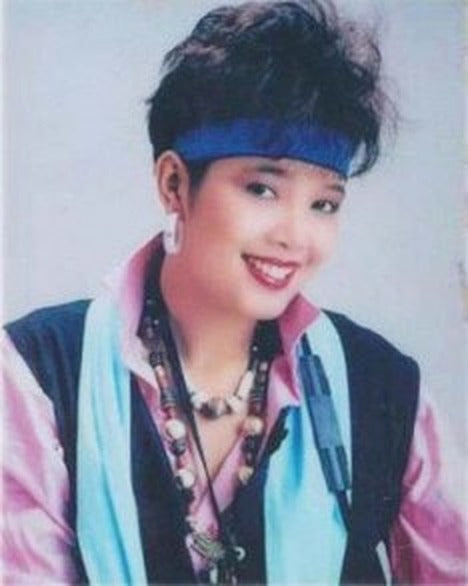
Pumpuang Duangjan became the most loved voice in the history of luk thung, Thailand’s country music. The daughter of a sugar cane worker, with almost no formal schooling, she rose in the 1980s as the Queen of Luk Thung, took the genre onto modern stages, and died of lupus at just 30 in B.E. 2535 (1992). Her royal cremation was held at Wat Thap Kradan in Suphanburi, where her ashes remained for 23 years. In B.E. 2558 (2015) those relics became the main sacred material of the first-batch Khun Paen Phrai Mae Pumpuang.
Early Life and Family
She was born Ramphueng Chithan on 4 August B.E. 2504 (1961) at Ban Nong Nok Khao in Chainat province. She grew up at Ban Don Tamlueng, Bo Suphan subdistrict, Song Phi Nong district, Suphanburi.
Her parents were Samran and Charan Chithan. The fifth of twelve children, she belonged to a family that worked the sugar cane fields. Money was always tight, and she left school before finishing the second year of primary school. At home everyone called her Phueng.
The Road to Fame
From about the age of eight she entered local singing contests, often winning, under the stage name Nam Phueng Na Rai Oi.
When she was around fifteen, her father took her to the singer and bandleader Waiphot Phetsuphan. She joined his troupe and recorded her first song, Kaew Ror Phi. Not long after, the songwriter Mon Mueang Nuea gave her the stage name that would make her famous: Pumpuang Duangjan.
Queen of Luk Thung
Success did not arrive overnight. She formed her own band and kept touring. Her breakthrough came in the early 1980s, when she recorded songs written by Lop Burirat. A bright, playful voice and energetic stage presence made her a household name.
She later recorded with larger labels and released a run of hit albums. From B.E. 2526 (1983) she also acted in films, toured overseas, and brought luk thung to younger and city audiences with a modern pop sound.
On 12 September B.E. 2532 (1989) she received a royal award from Her Royal Highness Princess Maha Chakri Sirindhorn for the song Siam Mueang Yim.
Marriage and Family
On 9 January B.E. 2526 (1983) she married Kraisorn Saeng-anan, also known as Kraisorn Leelamekhin. Their only son, Phet, was born in B.E. 2530 (1987). He and her sisters still lead the memorial at Wat Thap Kradan each June.
Illness and Death
From late B.E. 2534 (1991) she was seriously ill with systemic lupus erythematosus. She was treated at Siriraj Hospital in Bangkok and later sought care in Chanthaburi.
On 13 June B.E. 2535 (1992), while travelling to pay respect to Phra Buddha Chinarat in Phitsanulok, she collapsed. She died that evening at Buddhachinaraj Hospital, at the age of 30. The nation mourned, and lupus is still often called Pumpuang’s disease in Thailand.
Royal Cremation at Wat Thap Kradan
Her body was brought back to Suphanburi. The royal cremation took place at Wat Thap Kradan, close to the village where she grew up, on 25 July B.E. 2535 (1992), in the presence of Princess Sirindhorn. Her ashes were kept at the temple in a dedicated shrine.
Her Relics and the First Batch Khun Paen
In B.E. 2558 (2015), 23 years after her death, her younger sister Salakjit Duangjan dreamed that Pumpuang asked for her relics to be used for the good of Buddhism. The family went to the abbot of Wat Thap Kradan, Phra Athikan Prasong Khunakaro, who agreed to make a Khun Paen with her relics as the main sacred material, blended with other blessed materials.
The mass consecration was held on 31 May B.E. 2558 (2015). Seventeen masters took part, among them Luang Pu Nu In Kitisaro of Wat Pa Phutthamongkhon, Luang Phor Uaiphon of Wat Don Yai Hom, Luang Phor Noppawan of Wat Sena Nimit and Phra Ajarn Jak of Wat Chung, with a royal Brahmin leading the rites. Her husband, her son and her sister attended.
The batch was called Phueng Pha Ruay, meaning Phueng brings wealth. It was pressed in large and small molds, in five standard colours, with an embedded takrut of copper, silver or gold. The molds were destroyed after pressing. Funds went to the temple’s sermon hall. The pieces quickly became popular with singers, songwriters and traders.
Legacy
More than three decades on, Pumpuang remains the face of luk thung. In B.E. 2552 (2009) she was honoured as a Piya Silpin, a beloved artist. Her life was told in the film The Moon in B.E. 2554 (2011), and Google marked her birthday with a Doodle in B.E. 2561 (2018).
At Wat Thap Kradan, statues of her draw visitors every day. People bring red roses and ask for luck. Every June the temple holds a memorial of nine days and nights, when her relics are carried from the shrine to the sermon hall and hundreds of luk thung singers take the stage in her honour.
Shop authentic amulets at OOB Amulets.
Leave a Reply