Quick facts
- Temple: Wat Tha Sung
- Province: Uthai Thani
- Born: 8 July 1916 (B.E. 2459), in Suphanburi; a shorter account also gives 28 June 1917
- Died: Friday, 30 October 1992, at 4:10 p.m., at Siriraj Hospital
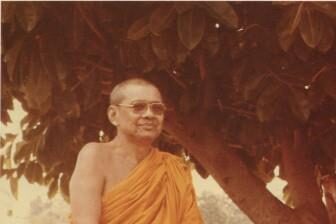
LP Lersi Lingdam (LP Ruesi Lingdam), formally known as Phra Ratchaprommayan, of Wat Tha Sung, Uthai Thani, was one of the most influential monks of the 20th century. He was born on Saturday, 8 July 1916 (BE 2459) in Sali Subdistrict, Bang Pla Ma District, Suphanburi Province, into a prosperous farming family. His father was Mr. Khuang Sangsuawan, and his mother was Mrs. Sombun Sangsuawan. He was the third child among five siblings. A shorter published account also gives his birth date as 28 June 1917.
Auspicious Birth
Before his birth, his mother dreamed of a radiant golden Brahma deity, adorned with diamonds, descending and entering her womb. When he was born, his uncle, Luang Phor Lek Kesaro, remarked: “This child comes from Brahma.” He was named Phrom, later changed in household records to Sangwian, though within the family he was called Lek or Phor Klang.
Early Education and Life Before Ordination
At age 7 (BE 2466), he began his studies at Wat Bang Nom Kho School in Ayutthaya, completing Grade 3. By 15, he lived with his grandmother in Thonburi, where he studied traditional Thai medicine. At 19, he served as a military pharmacist at the Naval Medical Department, today the Somdet Phra Pinklao Hospital.
Ordination and Prophecy
At 20, on 16 July 1936 (BE 2479), he was ordained at Wat Bang Nom Kho, Ayutthaya. His preceptor was Phra Khru Rattanapirom, with Luang Phor Pan (Sanantho) as his kammavacacariya and Luang Phor Lek as his anusasana.
At his ordination, a prophecy was given: of the four novices ordained together, three would remain lifelong monks. Among them, one — LP Lersi Lingdam — was destined to guide vast numbers of disciples. The prophecy foretold that after 20 years in robes, he would leave his original monastery, and from then, his path would flourish.
Studies and Spiritual Training
From 1937–1940, he studied pariyatti and achieved the highest Pali studies up to Nak Tham Ek and Parian 4. His training included meditation and esoteric practices with some of Thailand’s most respected masters:
- Luang Phor Pan, Wat Bang Nom Kho
- Luang Phor Jong, Wat Natang Nok
- Luang Phor Sook, Wat Pak Khlong Makham Thao
- Luang Phor Niam, Wat Noi
- Luang Phor Nong, Wat Amphan
- Luang Phor Soon, Wat Bang Pla Mor
- Luang Phor Reung, Wat Mai Phin Sawat
He also studied meditation with Luang Phor Sot of Wat Paknam, renowned for Dhammakaya meditation, and came into contact with many other arahant masters of the time.
Teaching, Leadership, and Construction Works
In 1968 (BE 2511), at age 52, he moved to Wat Tha Sung (Wat Chantharam), Uthai Thani, which at that time was only 6 rai of land. Over the following decades, under his guidance, it expanded to nearly 289 rai, with more than 140 religious structures built, including the 100-meter Vihara, the new Ubosot, meditation halls, schools, and hospitals.
He also established charitable works nationwide:
- Hospitals and clinics, such as the Rural Mother & Child Hospital No. 61
- Schools, including Phra Suthammayanthera Witthaya School
- Charity centers for the poor in remote areas (established in 1977 under royal command of King Rama IX)
- Buddha statues, Ubosots, and Dharmic monuments across more than 30 temples in Thailand
His projects collectively cost over 600 million baht, all funded through merit-making and donations. Accounts also record that businessmen who attributed later success to his blessings donated land, buildings and funds, allowing the temple to add a school within the compound, a Dhamma library and learning center, a large-scale meditation hall, and resources to train young children in Buddhist values. Later generations of those families have continued to support scholarships, construction and charity projects.
Recognition and Titles
- In 1984 (BE 2527), at age 68, he received the royal ecclesiastical title Phra Suthammayanthera.
- In 1989 (BE 2532), he was elevated to Phra Ratchaprommayan.
Naga Stones and Forest Practice
In his forest retreats, LP Lersi Lingdam was known to have the rare ability to see naga stones and naga gems hidden in the wilderness. These weren’t ordinary stones, but sacred relics said to hold deep elemental and spiritual force. In one account, he gifted a naga gem to Arjan Tau, a fellow forest monk who was also a disciple of Luang Phor Pinut of Wat Sanamlao. These three formed a sacred spiritual lineage, their wiccha (mystical knowledge) intricately intertwined and passed down through deep meditation, trust, and merit.
Phra Kham Khao and Phra Hang Mak
Among his most famous creations is the Phra Kham Khao (พระคำข้าว), also known as the Phra Maha Lap (Great Fortune Buddha). Crafted from sacred white powders and herbs, and inspired by the image of Phra Phuttha Chinnarat, it is widely known for enhancing wealth and fortune, unlocking opportunities in business and career, increasing Metta Mahaniyom (charm and likability), and creating rapid improvements in one’s luck and path. Even during Luang Phor’s lifetime, these amulets were in high demand. After his passing, they became closely held by families who attribute later success to his blessings.
A traditional way of praying with Phra Kham Khao and Phra Hang Mak, as recorded in the shorter account, is as follows:
- Chant “Namo Tassa” three times to pay respect to the Buddha.
- Recite the “Itipiso” once.
- Make your personal wish or prayer—be clear and sincere.
- Chant Luang Phor Phan’s sacred invocation: “Itthiritthi Phuttha Nimitthang, Kho Detcha Detchang, Kho Det Detcha, Jong Ma Pen Tee Phueng Kaema A-U Nee Thoet”
Passing
In 1992 (BE 2535), he fell gravely ill with pneumonia and septicemia. On Friday, 30 October 1992, at 4:10 p.m., LP Lersi Lingdam passed away at Siriraj Hospital at the age of 76. His body was enshrined in a glass coffin within a golden, jewel-adorned structure at Wat Tha Sung, where it remains to this day, incorrupt and venerated by countless devotees.
Teachings and Legacy
LP Lersi Lingdam emphasized:
- Dhamma practice aimed at Nibbana
- Daily adherence to sila, samadhi, panna (morality, concentration, wisdom)
- The 40 Kammatthana meditation objects and the Mahasatipatthana Sutta as essential practices
- Simple, direct teachings recorded in over 1,000 audio tapes and numerous books
He classified his disciples into three levels:
- Basic disciples – those striving to keep the Five Precepts as best they could
- Intermediate disciples – those with pure sila and steady meditation
- Foremost disciples – those who fully uphold the Five Precepts, have unshakable faith in the Triple Gem, and aspire to Nibbana in this very life
Special Attainments and Qualities
- Mastery of Abhinna (supernormal powers) and Vipassana insight
- Recognized for clairvoyance and knowledge of past and future lives
- Loved and respected by monks, Brahmas, devas, and humans alike
- Known for humility, compassion, and tireless teaching
Legacy Statement
In 1976 (BE 2519), a golden plaque was placed under the main Buddha image at Wat Tha Sung, with his words:
I, Phra Maha Veera, together with King Bhumibol and Buddhist faithful, built this temple in honor of the Triple Gem. In the future, a Dhammaraja named Sirithammaracha will come to restore this temple with arahants, carrying forward the Sasana. As for us, we will have all entered Nibbana.
He also made a vow for his disciples:
Any who follow my teachings, whether we meet in person or not, I accept as disciples. At death, may they retain mindfulness, incline toward wholesome deeds, and share in the merit I have cultivated.
Shop authentic amulets at OOB Amulets.