Quick facts
- Temple: Wat Nong Pho
- Province: Nakhon Sawan
- Born: 6 February B.E. 2403
- Died: 22 May B.E. 2494, aged 92
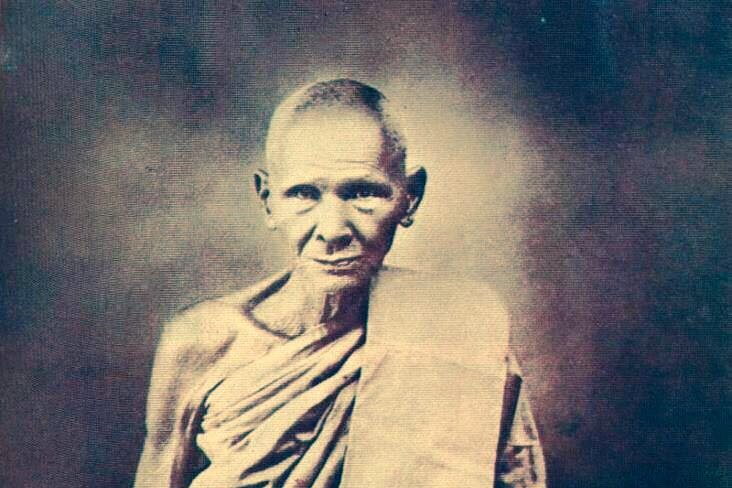
Luang Phor Derm of Wat Nong Pho, born on 6 February 2403 in Nakhon Sawan, is among Thailand’s most revered monks and is remembered as the Father of Nakhon Sawan. He is especially famed for his skill in creating the legendary “Khmer Knife” (Mee Mor). These knives are highly sought after for their spiritual potency and are believed to offer protection and a range of other blessings. As a highly influential figure, Luang Phor Derm had countless disciples who sought his guidance in both Buddhist teachings and the magical arts.
Early Life
He was born into a farming family in the village of Nong Pho. He grew up with a strong affinity for animals, particularly birds, which he learned to care for under the mentorship of local hunters. Despite a rural upbringing, he was deeply connected to Buddhist teachings from an early age. His inclination toward the spiritual path was already clear in his youth, when he received training in Buddhist scriptures, meditation, and various occult practices.
Path to Priesthood
At the age of 20, Luang Phor Derm entered the monkhood at Wat Kao Kaew in Phayuhakhiri, Nakhon Sawan, on 31 October 2423. His ordination was conducted by Venerable Phor Kaew from Wat Inthararam. Although his formal education in the Dhamma began after ordination, he worked diligently, studying Buddhist texts and mastering meditation and the esoteric practices of his teachers. His desire for knowledge led him to study with several renowned masters, including Luang Phor Phit from Wat Sra Thale and Luang Phor Kam from Wat Kao Kaew.
Mastery of the Khmer Knife and Spiritual Power
A defining part of his legacy was his expertise in making “Mee Mor,” or Khmer Knives, spiritual tools crafted with specific prayers and rituals. These knives were believed to possess protective powers, able to shield their bearer from harm, including black magic and physical threats. They also carried metaphysical attributes, enhancing the wearer’s spiritual energy and offering protection against enemies. His work with these knives earned him the title “The God of Nakhon Sawan.”
Luang Phor Derm’s knowledge of the occult arts was vast, and his spiritual practice spanned meditation, magical incantations, and the creation of talismans. His most renowned creation, the Khmer Knife, became famous for its ability to protect the wearer from bullets, sharp objects, and even mystical forces.
The Legend of the Khmer Knife
It is said that the Khmer Knife was rooted in the monk’s wish to protect people from dangerous individuals, such as thugs and criminals who had abused spiritual practices for violent purposes. The knives became essential tools for those who needed to defend themselves, especially in rural areas where spiritual power was closely intertwined with physical safety.
One of the most famous stories involves a merchant named Kaen, who was targeted by two armed assailants. Despite being shot twice, the bullets failed to penetrate his body, all thanks to the protective power of the Khmer Knife. That event solidified the knife’s reputation as a tool of immense spiritual power.
Later Life and Legacy
In 2475, Luang Phor Derm was bestowed the title of “Phra Khru Niwat Thammaphan” in recognition of his contributions to the monastery and his influence in the local community. He continued his work at Wat Nong Pho, passing on his teachings to a new generation of monks and disciples.
In 2494, Luang Phor Derm predicted his own death. He urged his followers to prepare for his passing and instructed them on the necessary rites and duties. On 22 May 2494, he passed away at the age of 92, after a long and spiritually fulfilling life. His death was accompanied by unusual phenomena, including a massive rainfall that locals believed was a sign of his final blessing.
Conclusion
Luang Phor Derm’s life and work left a lasting impact on Thai spirituality. His contributions to the art of creating powerful amulets, his teachings in meditation, and his deep devotion to the Buddhist faith continue to inspire countless followers. As the “God of Nakhon Sawan,” his legacy lives on through his many disciples and the continued reverence for his work in Thai occult traditions.
Shop authentic amulets at OOB Amulets.