Quick facts
- Temple: Wat Preedaram
- Province: Nakhon Pathom
- Born: 18 January B.E. 2464 (1921), in Ayutthaya
- Died: 11 November B.E. 2543 (2000)
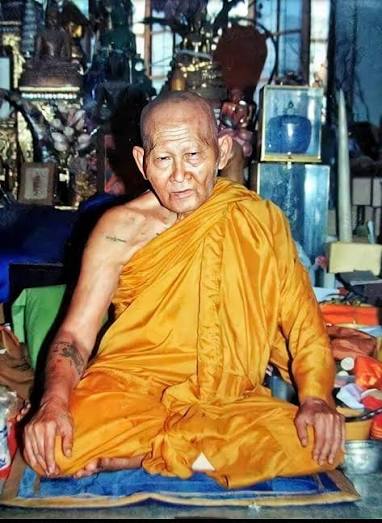
Luang Phor Sawai Thitawanno, later honoured with the title Phra Khru Sathit Chotikhun, was a respected abbot of Wat Preedaram (also known as Wat Yai Som) in Nakhon Pathom. Thai devotees came to call him the Master of Magic of Khlong Chinda, and collectors remember him especially for his Palad Khik, above all the Palad Khik Suea Bin (flying tiger).
Early Life
He was born on 18 January B.E. 2464 (1921) in Ban Ratchakhram, Bang Sai, Ayutthaya. His father, Mr. Suea, was a village headman who was himself known for Kongkrapan (invulnerability) Wicha.
After his father passed away, the young Sawai moved to Khlong Chinda in Sam Phran, Nakhon Pathom. There he became a temple boy at Wat Yai Som, the temple now known as Wat Preedaram, and finished his primary schooling there.
Ordination
He was ordained as a novice in B.E. 2481 (1938) under Luang Pu Jai of Wat Choeng Len. On 4 July B.E. 2484 (1941) he received full ordination at Wat Preedaram, with Luang Phor Yai of Wat Bang Chang Tai as his preceptor, and was given the monastic name Thitawanno. He went on to pass the highest level of Dhamma studies (Nak Tham Ek) and devoted himself to Vipassana meditation.
Teachers and Wicha
Luang Phor Sawai was a tireless seeker of sacred knowledge and is said to have learned from more than 20 teachers, both monks and lay masters. He went on tudong (wandering pilgrimages) through Isan, Khao Wong Phra Chan in Lopburi, and Uttaradit. Among his teachers were:
- Luang Pu Poon Kesaro, Wat Mai Pin Kliao: Kongkrapan yant, Maha Ud, Metta and the Takrut Ton lineage
- Luang Phor Ngern, Wat Yai Som: his first training in samadhi
- Suea Yoi Chu Rod: the Yant Na Phak forehead yant, which became his signature
- Luang Phor Khao, Wat Suan Som: the famous Na Na Thong, pressing gold leaf into the forehead
- Ajarn Pin Rod Khlong Tan: the art of making Palad Khik
- Ajarn Chaem, Takho Sung: traditional Buddhist herbal medicine
He also studied for a time with great masters such as Luang Phor Ngern of Wat Don Yai Hom.
Abbotship and Service
In B.E. 2492 (1949), at just 28 years old, he became abbot of Wat Preedaram. He found the temple run-down and rebuilt it, and he served the community well beyond the temple walls, helping to build schools, a clinic and roads. In B.E. 2543 (2000) he was honoured with the Royal Sema Dhammachakra for his service to Buddhism.
Passing and Legacy
Luang Phor Sawai passed away from old age on 11 November B.E. 2543 (2000), aged 80, after 63 years as a monk. Devotees say his body did not decay after his passing.
Sacred Objects and Amulets
Luang Phor Sawai is best remembered for his Palad Khik, especially the famous Palad Khik Suea Bin (flying tiger). These are now expensive and in high demand for the Metta, commerce, protection and Klaew Klaad blessings they are known for.
His other well-known creations include:
- Takruts, including Takrut Ton, Takrut Suea and Takrut Phitsamon
- Pha Yant Maha Yant Kamnerd Narai
- Rian (coins), his first issued in B.E. 2508
- Lockets and monk images, treasured for wealth and wish granting
- Phra Kring, Khun Paen, Chuchok and Pidta
In the 1990s, when Luang Phor Sawai was at the height of his fame, people travelled from far and wide to seek his blessings. Many of them still wear his amulets today.
Shop authentic amulets at OOB Amulets.